




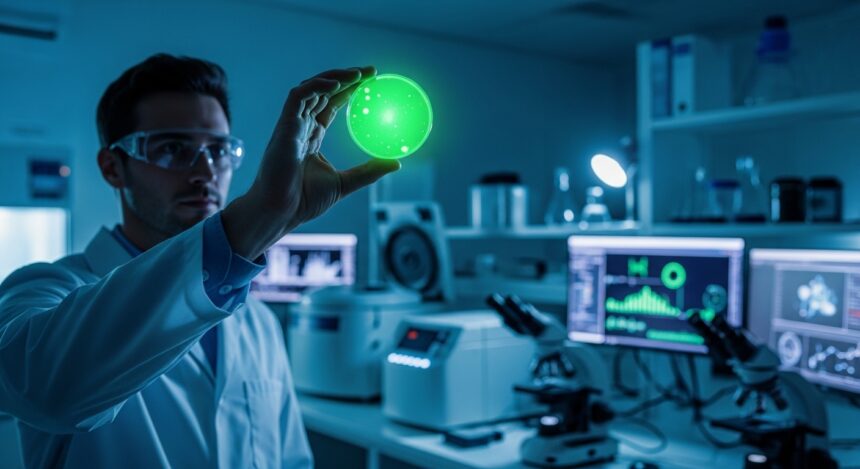
Beyond the Petri Dish: How Biotechnology Breakthroughs Are Rewriting Life in 2024
If you’ve scrolled through the news lately, you might have caught a glimpse of headlines about “lab-grown meat,” “CRISPR babies,” or “mRNA vaccines.” It all sounds like science fiction, doesn’t it? But the truth is, we are living right in the middle of a revolution. It’s not happening in a galaxy far, far away; it’s happening in labs just down the road, and it’s moving faster than most of us realize.
Welcome to the new age of biology. Biotechnology breakthroughs are no longer just academic jargon for scientists in white coats. They are becoming part of our daily lives—changing how we eat, how long we live, and how we heal.
At LatestTrends, we love cutting through the complex jargon to bring you the stuff that actually matters. So, let’s put on our lab goggles (safety first!) and explore the most exciting innovations in biotech that are shaping our future right now.
What Exactly Is Biotechnology? (The Simple Breakdown)
Before we dive into the deep end, let’s get one thing straight. Biotechnology is simply the use of living organisms to make products or solve problems.
Think of it this way:
-
Ancient biotech: Using yeast to bake bread or ferment wine.
-
Modern biotech: Using bacteria to produce insulin for diabetics.
-
Future biotech: Editing your DNA to wipe out a genetic disease before you are born.
It’s biology meets technology. And right now, we are at a tipping point where the tools have become so precise and so powerful that the possibilities feel almost limitless.
1. CRISPR and Gene Editing: The “Find and Replace” for DNA
If there is one star of the biotech show right now, it’s CRISPR. Pronounced “crisper,” this technology is often described as a pair of molecular scissors. But I like to think of it more as a “find and replace” tool for your genetic code.
How It Works (In Plain English)
Imagine your DNA is a giant, complex instruction manual. Sometimes, there is a typo in the manual that tells your body to develop a disease like Huntington’s or certain types of breast cancer. CRISPR allows scientists to find that exact typo, cut it out, and paste in the correct instruction.
The Real-World Impact
We aren’t just talking about theory anymore. In the last year alone, we’ve seen incredible strides:
-
Sickle Cell Disease: The UK and US have approved the first-ever therapies using CRISPR to treat sickle cell disease. Patients who spent their lives in pain are now potentially cured. It’s not a treatment that manages symptoms; it’s a fix.
-
Agriculture: Scientists are using gene editing to create mushrooms that don’t brown and wheat with lower gluten content. It’s faster than traditional cross-breeding and doesn’t necessarily involve introducing DNA from another species (like GMOs).
The Human Side:
I recently read about a patient named Victoria Gray, one of the first people to receive CRISPR therapy for sickle cell. Before treatment, she was in and out of the hospital constantly. Now, she’s living a full life. That’s not a headline; that’s a miracle.
2. Synthetic Biology: When Living Things Become Factories
If CRISPR is the editing software, synthetic biology is the operating system. This field goes beyond editing what already exists; it involves designing and building entirely new biological systems from scratch.
Think of it as brewing beer, but instead of getting alcohol, you are growing sustainable fabrics, spider silk without the spiders, or even biofuels.
Cool Examples You Should Know About
-
Vegan Leather: Companies are now brewing leather in labs using yeast. It feels like the real thing, but it’s grown without harming animals and with a fraction of the environmental impact.
-
Artemisinin: This is a key malaria drug. It used to be extracted from plants, making it slow and expensive. Scientists engineered yeast to produce it, stabilizing the supply and saving countless lives.
-
Methane-Eating Bacteria: Some startups are using bacteria to gobble up methane (a potent greenhouse gas) and convert it into high-protein animal feed. It’s like turning pollution into lunch.
Synthetic biology is blurring the line between the digital world and the living world. We are coding with DNA, and the output is physical matter.
3. mRNA Technology: The Instruction Manual Revolution
Most people hadn’t heard of mRNA before 2020. Now, it’s a household name thanks to the COVID-19 vaccines. But here’s the secret the media isn’t shouting enough: that was just the first draft.
Beyond the Pandemic
mRNA technology works by sending a set of instructions to your cells, telling them to produce a protein that triggers an immune response. Because it’s just an instruction manual, it’s incredibly fast to design.
What’s coming next?
-
Cancer Vaccines: This is the holy grail. Imagine a doctor taking a biopsy of your tumor, sequencing it, and creating a personalized mRNA vaccine that teaches your immune system to hunt down and destroy only those specific cancer cells. Trials are already underway for melanoma and pancreatic cancer, and the early results are promising.
-
Rare Diseases: For diseases where there is no commercial incentive to develop a drug (because so few people have them), mRNA offers a way to create personalized treatments quickly.
It’s like having a universal hardware system where you can just swap out the software to fight a different enemy.
4. Lab-Grown Meat: Dinner Without the Animal
Okay, let’s talk about food. The idea of eating a burger grown in a vat freaks some people out. But let’s look at the facts.
Why Are We Doing This?
Traditional meat production is hard on the planet. It uses massive amounts of water, land, and produces huge amounts of greenhouse gases. Cultivated meat (the preferred term by the industry) is grown from a small sample of animal cells in a bioreactor.
Where We Stand Now
-
Regulatory Approval: The United States has already approved the sale of lab-grown chicken from companies like Upside Foods and Good Meat. You can actually find it in select high-end restaurants in the US.
-
The Taste Test: Early adopters say the texture and taste are identical to traditional chicken because… well, it is chicken. It’s just grown differently.
The Practical Tip:
Don’t expect to see this in your local supermarket tomorrow. The challenge now is “scaling up.” Making a small batch is easy; making millions of tons affordably is the hard part. But major food corporations are investing billions because they see this as the future of protein.
5. Bioprinting and Organ Regeneration
The waitlist for organ transplants is heartbreaking. There are simply not enough donors. But what if we could just print a new one?
How 3D Printing Meets Biology
Bioprinting uses a “bio-ink” made of living cells. A printer lays down these cells layer by layer to build a simple tissue structure.
We aren’t printing full hearts yet, but we are seeing massive progress:
-
Skin Grafts: Bioprinted skin can be used for burn victims, created from their own cells to prevent rejection.
-
Drug Testing: Pharmaceutical companies are using bioprinted liver and kidney tissue to test new drugs. This gives them better results than animal testing and is faster.
-
Organ Scaffolds: Scientists can now strip the cells from a donor organ (like a pig heart), leaving behind a collagen scaffold. They can then fill that scaffold with a patient’s own cells. It’s like renovating a house rather than building one from scratch.
The Ethical Side of the Petri Dish
With all this power comes responsibility. It’s impossible to talk about biotechnology breakthroughs without addressing the elephant in the room: ethics.
-
Germline Editing: Editing the DNA of sperm, eggs, or embryos means the changes are passed down to future generations. Where do we draw the line between curing disease and “designer babies”?
-
Accessibility: If a CRISPR cure costs a million dollars, does it only belong to the rich? How do we ensure these breakthroughs are available to everyone?
-
Food Anxiety: How do we convince the public that a lab-grown burger is safe and nutritious?
These are conversations we all need to be part of. Science determines what we can do; society determines what we should do.
Frequently Asked Questions
Q: Is biotechnology safe for the environment?
A: It depends on the application. Some biotech, like lab-grown meat and biofuels, is designed specifically to reduce environmental harm. However, the release of genetically modified organisms into the wild must be handled with extreme caution to prevent ecological imbalance. Regulation is key.
Q: Will biotech make food more expensive?
A: Initially, yes. R&D is costly. However, in the long run, the goal is to make food production more efficient and resilient to climate change, which should stabilize and potentially lower prices. Think of how expensive the first cell phones were compared to now.
Q: Can CRISPR cure all genetic diseases?
A: Not yet. It is excellent for diseases caused by a single typo in a gene (like sickle cell). However, many common conditions (like heart disease or diabetes) are influenced by hundreds of genes and lifestyle factors, making them much harder to “fix” with editing alone.
Q: What is the difference between GMO and CRISPR editing?
A: Traditional GMOs often involve inserting DNA from a different species (e.g., putting a fish gene into a tomato to make it frost-resistant). CRISPR can be used to simply tweak the genes already present in the organism, which some argue is more “natural” and is regulated differently in many parts of the world.
Q: How close are we to anti-aging pills?
A: We are closer than ever, but it’s not a magic pill. Companies are researching drugs that target senescent cells (“zombie cells” that accumulate as we age). Clearing these cells in mice has been shown to reverse some signs of aging. Human trials are underway, but extending human lifespan significantly is still a long-term goal.
Conclusion: The Future is Alive
We are living through a biological renaissance. The biotechnology breakthroughs we are seeing today—from CRISPR cures to mRNA vaccines and sustainable foods—are not just incremental improvements. They are paradigm shifts.
For us, the general public, the most important thing is to stay curious. These technologies are going to shape the next decade of our lives, from the medicine we take to the food on our plates.
At LatestTrends.xyz, we’ll be keeping an eye on these trends as they evolve. The future isn’t just digital; it’s biological. And honestly? It looks pretty amazing.