




Beyond the Hype: What the Future of Artificial Intelligence in 2026 Really Looks Like
Let’s be honest for a second. When you hear the phrase “future of Artificial Intelligence,” what comes to mind? Is it robots taking over the world, or maybe flying cars that drive themselves? Hollywood has given us some pretty wild ideas over the years.
But here at LatestTrends.xyz, we like to keep our feet on the ground while looking ahead. As we cruise through 2026, the reality of Artificial Intelligence is far more interesting—and honestly, far more useful—than the sci-fi movies predicted. It’s no longer this distant, futuristic concept. It’s here, it’s evolving fast, and it’s quietly weaving itself into the fabric of our daily lives in ways we couldn’t have imagined just a few years ago.
Whether you’re a tech enthusiast who follows every update or someone who just wants to know why their shopping recommendations are getting scarily accurate, this guide is for you. Let’s pull back the curtain and explore where AI is heading right now.
The Shift from “Wow” to “Why Not?”
If you remember 2022 and 2023, that was the era of the “Wow.” Generative AI burst onto the scene, and everyone was amazed that a computer could write a poem or paint a picture in seconds. It was a party trick.
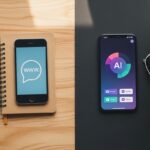
Now, in 2026, we’ve entered the era of “Why Not?”. The novelty has worn off, but the utility has skyrocketed. We aren’t staring at AI as a shiny object anymore; we are integrating it as a reliable tool. The big shift we are seeing is Artificial Intelligence moving from being a public novelty to a personalized necessity.
1. AI That Knows You (Better Than You Know Yourself?)
Remember the old days of targeted ads where you’d search for a gift for your mom and then see that exact gift following you around the internet for weeks? Annoying, right?
In 2026, personalization has gone deep—really deep. It’s not just about tracking your cookies; it’s about understanding your context.
-
Contextual Awareness: Your digital assistant (which we used to just call a “phone”) now understands nuance. If you type, “Remind me to pick up the usual on the way home,” it knows that “the usual” means a loaf of sourdough from the bakery two blocks from your office because that’s what you do every Thursday.
-
Predictive Health: Wearable tech has gotten a massive AI upgrade. It no longer just tells you that you took 8,000 steps. It can detect subtle changes in your voice patterns or typing speed to flag potential stress levels or even early signs of illness before you feel symptomatic. It’s like having a concerned friend living on your wrist.
-
Hyper-Personalized Learning: Whether you’re learning guitar or a new language, AI tutors in 2026 adapt in real-time. If you struggle with a specific guitar chord, the app slows down, adjusts the lesson plan, and finds a different method to teach you until you get it right. It’s a one-on-one tutor that never gets impatient.
2. The Workplace Evolution: Your Co-Pilot Gets a Promotion
For a while, everyone panicked about AI taking jobs. In 2026, the conversation has shifted. It’s not about replacement; it’s about augmentation. We aren’t working for the machines; we are working alongside them.
Think of AI as the ultimate intern or co-pilot. It handles the boring stuff so you can focus on the human stuff.
-
The Death of the Grunt Work: In creative agencies, writers use AI to generate 50 headlines in seconds to beat writer’s block. In finance, analysts use AI to scrub through millions of data points to find anomalies, leaving them free to strategize on why those anomalies matter.
-
Real-Time Collaboration: Have you been in a meeting lately where someone misses half of it because they were taking notes? AI meeting facilitators are now standard. They join your Zoom call, take perfect notes, assign action items automatically, and send a summary to everyone before you’ve even left the virtual room.
-
Coding for Everyone: You no longer need a computer science degree to build a simple tool. “Citizen developers” are on the rise. With intuitive AI interfaces, a small business owner can describe the app they need (“I need a way to track inventory and alert me when stock is low”), and the AI helps build a basic, functional version. It’s democratizing creation.
3. Creative Collaboration: The Human Touch Still Wins
There was a massive fear among artists and writers a few years ago that AI would make creativity obsolete. In 2026, we’ve realized the opposite is true: AI is the ultimate muse.
It hasn’t replaced human creativity; it has ignited it.
-
Writer’s Block is a Thing of the Past: Staring at a blank page? You can feed a few ideas to an AI tool and get back ten different opening paragraphs. You might hate nine of them, but that tenth one sparks an idea you never would have had on your own. You take that spark and run with it, making it yours.
-
Music and Art Remixing: Musicians are using AI to separate tracks from old recordings to create samples in ways that used to be impossible. Visual artists are using AI to generate textures and patterns, which they then import into Photoshop to paint over. The AI provides the raw material; the human provides the soul.
Practical Applications You Might Be Using Right Now
You might be thinking, “This sounds cool, but I’m not a musician or a coder. How does this affect me?” The beauty of the future of Artificial Intelligence in 2026 is that it’s becoming invisible. It’s just the default.
Smarter Homes, Quieter Lives
Your smart home is finally… smart. Remember when “smart” meant you could yell at a speaker to turn on the lights? Now, it’s proactive.
-
Energy Efficiency: Your thermostat doesn’t just follow a schedule. It learns that you like it cool when you sleep, but it also checks the weather forecast. If it knows a heatwave is coming tomorrow, it pre-cools the house slightly during the night when electricity is cheaper, saving you money.
-
Proactive Maintenance: Your smart appliances talk to each other. Your washing machine might notice a weird vibration pattern and alert you, “Hey, I think the drum bearing is wearing out. You might want to call a technician before I break down completely.” It’s maintenance that prevents disaster.
Revolutionizing Healthcare Access
This, to me, is the most exciting trend of 2026. AI is breaking down barriers to healthcare.
-
The Triage App: Got a weird rash at 10 PM? Instead of googling it and convincing yourself you have a rare tropical disease, you can use a medical AI app. You take a photo, answer a few questions, and it gives you a risk assessment. “This looks like a minor allergic reaction. Try some antihistamine and monitor it. No need to panic.”
-
Accessibility for All: Real-time translation for sign language is getting incredibly accurate. AI-powered glasses can describe the world to visually impaired users. “There is a chair three feet to your left, and a person is approaching from the right.”
The Challenges We Can’t Ignore
It’s not all sunshine and efficiency. As AI gets more powerful, the challenges get more complex. To be a trustworthy source, we have to look at the bumps in the road, too.
The “Black Box” Problem
Sometimes, AI makes decisions, and even the engineers who built it can’t explain why. If an AI denies you a loan, it has to explain why. In 2026, there is a massive push for Explainable AI (XAI) . Regulators are demanding that if an algorithm runs our world, it needs to show its homework.
Deepfakes and Digital Trust
We’ve moved past the era of obvious deepfakes. Now, the videos are nearly perfect. This makes trust a luxury item. We are developing new ways to verify authenticity—digital watermarks baked into the content at the hardware level. You might soon see a “Verified Human” badge on videos to prove they weren’t generated by an AI. Seeing is no longer believing.
The Energy Question
Training and running massive AI models takes an enormous amount of electricity. In a world focused on climate change, this is a problem. The good news is that the tech giants know this. The focus in 2026 is on “Green AI”—building smaller, more efficient models that don’t need a power plant to run. The future isn’t just smart; it has to be sustainable.
How to Stay Ahead of the Curve
Feeling overwhelmed? Don’t be. You don’t need to be a programmer to thrive in this new world. You just need to be a curious human.
-
Be a Prompt Artist: The skill of the future is communication. Learning how to ask the right questions (prompting) to get the best results from AI is like learning digital literacy in the 90s. Practice talking to these tools. Be specific. Give them context.
-
Focus on Soft Skills: Empathy, negotiation, creative brainstorming, leadership—these are purely human traits. AI can analyze data, but it can’t inspire a team. Double down on being human.
-
Stay Updated, But Skeptical: Read articles like this one! But always question the hype. If a new AI tool promises to change your life, try the free version first. See if it actually helps you before you buy in.
Frequently Asked Questions About AI in 2026
Q: Is AI going to make search engines like Google disappear?
A: Not disappear, but evolve. We are moving from “10 blue links” to conversational answers. In 2026, you search by asking a question and get a synthesized answer. However, the need to search for information isn’t going away; the way we find it is just getting faster.
Q: My parents are worried about AI. Should they be?
A: They should be aware, not afraid. The best approach is to show them the helpful side. Show them how it can organize their photos, summarize long articles they want to read, or help them plan a vacation itinerary. Practical help beats abstract fear every time.
Q: Can I trust AI with my personal data?
A: This is the million-dollar question. Trust is earned. Look for companies that are transparent about their data usage and give you control. In 2026, privacy-focused AI is a huge selling point. If a tool is free, remember—you are the product. Be careful what you share.
Q: What is the one job that will definitely exist in 10 years?
A: Teachers, nurses, plumbers, and creative directors. Jobs that require deep human empathy, physical dexterity in unstructured environments, and original thought are the safest. AI will be their tool, not their replacement.
Conclusion
So, where does that leave us? The future of Artificial Intelligence in 2026 isn’t about a big, scary takeover. It’s about a quiet, helpful integration. It’s about offloading the mental clutter so we can focus on connection, creation, and solving the big problems.
At LatestTrends.xyz, we believe the future is bright because it puts the power back in your hands. The technology is getting smarter, but it’s doing so to make your life easier. It’s not about man versus machine; it’s about man with machine.
Stay curious, stay human, and keep checking back with us for the next big shift on the horizon.