



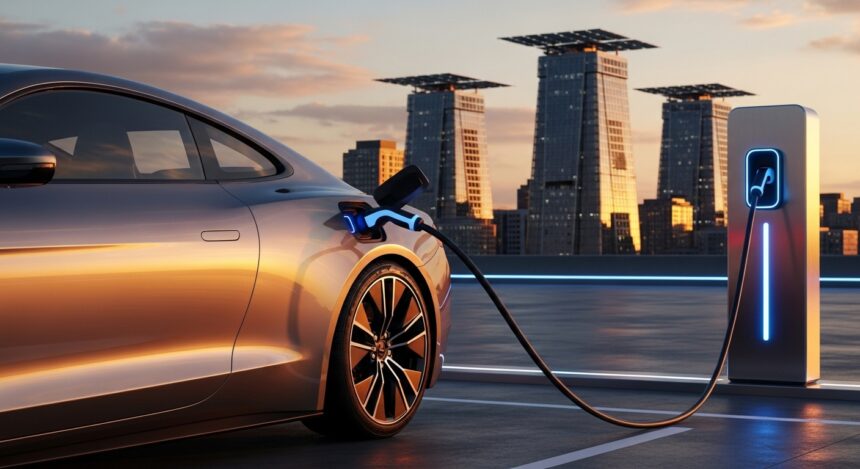
The Future of Electric Vehicles: What’s Coming in 2025 and Beyond
Electric Vehicles Future, Remember when electric cars seemed like science fiction? I do. I remember thinking they were weird golf cart-looking things that cost a fortune and couldn’t make it to the next town. Boy, has that changed.
Last week, I watched a Tesla silently pass me on the highway, and it hit me—we’re living through the biggest transformation in automotive history. Gas stations might eventually become as rare as video rental stores. And honestly? That future is arriving faster than most people realize.
Whether you’re curious about buying an electric vehicles future, worried about charging stations, or just wondering what the hype is about, this article will walk you through everything you need to know. No technical jargon, no confusing specs—just real talk about where EVs are headed and what it means for regular people like you and me.
Let’s explore the electric vehicles future together.
Why Everyone’s Talking About Electric Vehicles Right Now
You’ve probably noticed more electric cars on the road lately. Maybe your neighbor got a Tesla. Perhaps you’ve seen those quiet buses in the city. There’s a reason for this sudden shift.
The automotive world is at a tipping point. Major countries have announced plans to phase out gas-powered cars. California wants to end sales of new gas cars by 2035. The European Union has similar goals. Even major automakers are betting big on electric.
But here’s what really matters for everyday people: electric vehicles are becoming more affordable, more practical, and more desirable than ever before.
I remember talking to a friend who bought a Chevrolet Bolt last year. He was nervous about range anxiety—that fear of running out of juice with nowhere to charge. Six months later, he told me he’d never go back to gas. “It’s just easier,” he said. “I wake up with a full tank every morning.”
That’s the kind of shift happening right now. And it’s only going to accelerate.
The Current State of Electric Vehicles
Before we gaze into the crystal ball, let’s look at where we stand today. It’s important to understand the present to make sense of the future.
What’s Available Right Now
The electric vehicle market has exploded with options. It’s not just Tesla anymore—though they still dominate conversations. You’ve got:
-
Tesla (Model 3, Model Y, Model S, Cybertruck)
-
Ford (Mustang Mach-E, F-150 Lightning)
-
Chevrolet (Bolt EV, upcoming Silverado EV)
-
Hyundai and Kia (IONIQ 5, EV6)
-
Volkswagen (ID.4)
-
Rivian (R1T truck, R1S SUV)
-
Lucid (Lucid Air luxury sedan)
-
BMW, Mercedes, Audi (various luxury models)
Pretty much every major automaker now has at least one electric model. And the variety is stunning—from tiny city cars to massive pickup trucks that can power your house during an outage.
The Charging Situation Today
Let’s address the elephant in the room: charging. It’s the thing non-EV owners worry about most, and current owners think about least.
Right now, America has over 60,000 public charging stations with more than 160,000 outlets. That number grows weekly. Tesla’s Supercharger network remains the gold standard, but other networks like Electrify America, ChargePoint, and EVgo are expanding rapidly.
Here’s the truth most EV owners will tell you: you charge at home 90% of the time. You plug in overnight like your phone, and you wake up with plenty of range. Road trips require planning, sure, but apps make it surprisingly easy.
I talked to a family who drove their Tesla from Chicago to Florida last summer. They said the charging stops forced them to take breaks, explore small towns, and actually enjoy the journey instead of rushing. They called it a feature, not a bug.
What’s Coming: The Electric Vehicles Future by 2030
Now for the exciting part. The next five to seven years will bring changes that make today’s EVs look future. Let’s break down what’s on the horizon.
1. Battery Technology Will Transform Everything
The battery is the heart of any electric vehicles future It determines range, cost, and charging speed. And battery technology is evolving at lightning speed.
Solid-state batteries are the holy grail. Today’s EVs use lithium-ion batteries with liquid electrolyte. Solid-state replaces that liquid with solid material. The benefits are enormous:
-
More range (potentially 500-700 miles per charge)
-
Faster charging (10-80% in 10-15 minutes)
-
Safer operation (less fire risk)
-
Longer lifespan (batteries lasting 20+ years)
Toyota plans to introduce solid-state batteries in some vehicles by 2027 or 2028. Other manufacturers aren’t far behind. When this technology arrives, range anxiety becomes a distant memory.
Battery costs are also plummeting. In 2010, EV batteries cost around $1,200 per kilowatt-hour. Today, they’re under $150. By 2030, experts predict they’ll hit $60-$80. That means electric cars will cost the same or less than gas cars—without subsidies.
2. Charging Will Become Ridiculously Fast
Remember when charging an EV meant waiting hours? Those days are ending.
New ultra-fast chargers capable of 350 kilowatts or more are rolling out across the country. These can add 200 miles of range in about 10-15 minutes. Take a bathroom break, grab a coffee, and you’re ready to go.
Tesla’s V4 Superchargers are pushing similar speeds. And here’s huge news: Tesla has started opening its charging network to other brands. Ford, GM, Rivian, and others have signed agreements to adopt Tesla’s charging standard. By 2025, most new EVs will charge at Tesla stations without adapters.
Wireless charging is also coming. Imagine parking over a pad in your garage or even at a parking spot downtown, and your car charges automatically—no cables, no plugging in. Several companies are testing this technology, and it could arrive in premium vehicles within a few years.
3. Every Major Automaker Is Going All-In
The shift to electric isn’t a niche trend anymore—it’s the entire industry’s future. Here’s what major companies have announced:
General Motors plans to sell only electric passenger vehicles by 2035. They’re investing $35 billion in EV development.
Ford is spending $50 billion through 2026 and aims for half their global sales to be electric by 2030.
Volkswagen targets 70% electric sales in Europe by 2030 and 50% in North America and China.
Stellantis (Jeep, Ram, Chrysler) wants 100% electric sales in Europe by 2030 and 50% in the US.
Mercedes-Benz plans to go all-electric by 2030 where markets allow.
This isn’t marketing hype—it’s real investment. Factories are being retooled. Supply chains are shifting. The internal combustion engine’s days are numbered.
4. More Affordable Options Are Coming
One of the biggest barriers to EV adoption has been price. The average new EV still costs around $55,000—too much for many families. But that’s changing fast.
Several automakers are developing $25,000-$30,000 electric cars for the North American market. Tesla has hinted at a next-generation vehicle at this price point. Chevrolet already offers the Bolt EV around $27,000. Volkswagen, Hyundai, and others have affordable models elsewhere that will likely reach US shores.
By 2027, you’ll likely have multiple choices for genuinely affordable electric vehicles. And with gas savings, they’ll actually be cheaper to own than comparable gas cars.
5. Used EVs Will Flood the Market
Today’s used EV market is limited because most electric cars on the road are relatively new. But as more leases expire and early models trade hands, a wave of affordable used EVs is coming.
This matters because most people buy used cars. When you can pick up a reliable electric vehicle for $15,000-$20,000, the mass adoption tipping point really accelerates.
Battery degradation concerns have kept some buyers away from used EVs, but data shows modern batteries last much longer than expected. Tesla reports their batteries retain 90% capacity after 200,000 miles. That’s plenty of life for a second or third owner.
6. The Charging Network Will Go Mainstream
Remember when finding a gas station in a new town was stressful? No, because they’re everywhere. That’s where EV charging is headed.
The Biden administration has allocated $7.5 billion to build 500,000 public chargers by 2030. Private companies are investing billions more. Charging stations will become standard at:
-
Shopping malls and retail centers
-
Hotel parking lots
-
Apartment complexes and condos
-
Workplace parking garages
-
Restaurants and coffee shops
-
Movie theaters and entertainment venues
Charging will become something you do while living your life, not a special trip you plan around.
7. Electric Trucks and SUVs Will Dominate
Americans love their trucks and SUVs. For years, critics said electric vehicles couldn’t meet the demands of truck buyers. They were wrong.
The Ford F-150 Lightning has been a revelation. It’s America’s best-selling vehicle, now available electric. Owners love the instant torque, the massive front trunk, and the ability to power their homes during outages.
The Tesla Cybertruck finally hit the road in late 2023, and despite its polarizing looks, it’s generating enormous interest. The Chevrolet Silverado EV, Ram 1500 REV, and GMC Sierra EV are all arriving soon.
For SUV lovers, options abound: Kia EV9, Volvo EX90, Mercedes EQS SUV, Rivian R1S, and many more. Whatever vehicle type you prefer, there’s an electric version coming.
Tesla’s Role in Shaping the Electric Future
We can’t talk about the future of electric vehicles without discussing Tesla. Love them or hate them, they changed everything.
How Tesla Disrupted the Industry
Before Tesla, electric cars were slow, ugly, and impractical. The original Tesla Roadster proved EVs could be exciting. The Model S showed they could be luxurious. The Model 3 demonstrated they could be (somewhat) affordable.
Tesla did something automakers said was impossible—they built a profitable electric car company from scratch. They forced every major manufacturer to take EVs seriously.
Tesla’s Advantages Moving Forward
Tesla isn’t resting on its laurels. Several factors keep them competitive:
Supercharger network: This remains Tesla’s secret weapon. It’s reliable, widespread, and just works. Opening it to other manufacturers creates a new revenue stream while cementing it as the industry standard.
Manufacturing efficiency: Tesla’s Gigafactories use innovative manufacturing techniques that reduce costs. Their “unboxed” assembly process could cut production costs in half for future vehicles.
Software leadership: Tesla vehicles improve over time through over-the-air updates. Your car gets better while you sleep. Traditional automakers are catching up, but Tesla still leads here.
Vertical integration: Tesla makes many components in-house—batteries, motors, software, even insurance. This gives them cost and control advantages.
Tesla’s Challenges
It’s not all smooth sailing. Tesla faces real challenges:
-
Aging model lineup (the Model S and X are long in the tooth)
-
Increased competition from every direction
-
Quality control concerns that persist
-
Elon Musk’s controversial behavior affecting brand perception
-
The Cybertruck’s niche appeal despite massive hype
Still, Tesla remains the EV leader by a wide margin. Their future depends on executing the next-generation vehicle and maintaining their technology lead.
What This Means for You: Practical Considerations
All this future-gazing is interesting, but what does it mean for your next car purchase? Here’s my practical advice.
Should You Buy an EV Now?
If you’re considering an electric vehicle ask yourself these questions:</p>
-
Do you have a place to charge at home (garage or driveway)?
-
Is your daily driving within 100-150 miles round trip?
-
Do you have another vehicle for occasional long road trips?
-
Are you comfortable with some charging planning for longer journeys?
If you answered yes to these, an EV could work great for you right now.<br />If you live in an apartment without charging or regularly drive 500-mile days, waiting a few years might make more sense.</p>
What About Resale Value?
Early EVs depreciated heavily because technology improved so fast. That’s stabilizing. Modern EVs with good range and fast charging hold value reasonably well. Popular models like Tesla and Rivian actually have excellent resale value currently.
The Tax Credit Situation
Federal tax credits for EVs electric vehicles future changed with the Inflation Reduction Act. Up to $7,500 is available for qualifying vehicles, but there are income limits and vehicle price caps. Many EVs qualify, but not all. Check current rules before shopping.
Some states offer additional incentives. California, Colorado, New York, and others have their own rebate programs. Your utility company might also offer discounts or free charging equipment.
Infrastructure and Grid Concerns
A common question I hear: “Can the electrical grid handle millions of EVs?” It’s a fair concern, and the answer is more nuanced than you might expect.
The Grid Can Handle It (With Planning)
Studies show the US grid can support widespread EV adoption if charging is managed smartly. Most charging happens overnight when demand is low and wind power is often abundant.
The real challenge is local distribution—transformers in neighborhoods where everyone buys EVs simultaneously. Utilities are aware of this and planning upgrades. Smart charging that spreads out demand will help enormously.
Vehicle-to-Grid and Vehicle-to-Home
Here’s a fascinating development: future EVs won’t just take power from the grid—they’ll give it back.
Vehicle-to-home (V2H) technology lets your EV power your house during outages. The Ford F-150 Lightning already does this. During Texas winter storms, some Lightning owners kept their homes running while neighbors shivered in the dark.
Vehicle-to-grid (V2G) takes this further. Your EV could send power back to the grid during peak demand, and you’d get paid for it. Your car becomes a money-making asset while parked. Several pilot programs are testing this concept.
Challenges That Still Need Solving
The electric future is bright, but it’s not without obstacles. Let’s be realistic about what still needs work.
Charging Reliability
Public charging stations today can be frustrating. They’re sometimes broken, blocked by gas cars, or painfully slow. Networks are improving reliability, but it’s not seamless yet. This needs to get better for mainstream adoption.
Apartment and Condo Charging
If you don’t have a garage, charging is trickier. Some apartments are installing chargers, but progress is slow. Policies requiring new buildings to include EV charging infrastructure would help enormously.
Raw Material Concerns
EV batteries need lithium, cobalt, and nickel. Mining these has environmental and ethical concerns. Companies are working on better sourcing, recycling, and alternative battery chemistries that reduce or eliminate problematic materials.
Charging Speed Disparity
Not all EVs charge at the same speed. Some can take 350 kW, while others max out at 50 kW. That 350 kW charger won’t help much if your car can’t accept that power. Standardization would help consumers make informed choices.
Frequently Asked Questions
How long do electric vehicle batteries last?
Most modern EV batteries are warrantied for 8 years or 100,000 miles, but they typically last much longer. Real-world data shows Tesla batteries retain about 90% capacity after 200,000 miles. Battery degradation is gradual—you lose range slowly over many years, not suddenly.
Are electric vehicles really better for the environment?
Yes, even when accounting for battery manufacturing. Studies by the Union of Concerned Scientists and others show EVs produce lower lifetime emissions than gas cars in every region of the country. As the grid gets cleaner with more renewables, EVs keep getting greener.
What happens to old EV batteries?
They’re being recycled. Companies like Redwood Materials (founded by a Tesla co-founder) recover up to 95% of battery materials for reuse in new batteries. Battery second-life applications—like home energy storage—also extend useful life before recycling.
How much does it cost to charge an EV?
Home charging costs vary by electricity rates, but average around $0.12-0.15 per kWh. For a typical EV, that’s $0.04-0.06 per mile—roughly half the cost of gas. Public fast charging costs more, comparable to gas prices but still often cheaper.
Will gas cars disappear completely?
Not overnight. Gas cars will remain on roads for decades because people keep them for a long time. But new gas car sales will decline steadily. By 2040, they’ll likely be niche vehicles for enthusiasts, much like manual transmission cars today.
The Road Ahead
I’ve been following the electric vehicle industry for years, and I’ve never been more excited about what’s coming. We’re at that magical moment where technology, economics, and environmental necessity are aligning perfectly.
The electric vehicles future isn’t some distant dream—it’s arriving right now. Next year’s models will be better than this year’s. Charging will get faster. Prices will drop. Choices will multiply.
But here’s what I want you to take away: you don’t need to wait for perfection. Today’s electric vehicles are already excellent. They’re quiet, quick, cheap to fuel, and require almost no maintenance. Millions of owners will tell you they’d never go back.
If you’re curious, go test drive one. Feel that instant torque. Experience the one-pedal driving. Realize you never need another oil change. You might be surprised how quickly the future feels normal.
The gas station era isn’t ending tomorrow. But it’s ending. And the sooner we embrace that, the sooner we can enjoy the benefits—cleaner air, lower costs, and cars that are genuinely fun to drive.
The future of transportation is electric. And honestly? It can’t get here fast enough.