


Shifting Powers: Key Global Political Trends Shaping the Next Decade
It feels like the world is changing faster than ever, doesn’t it? If you switch on the news, you’re hit with a whirlwind of headlines—elections in one country, protests in another, tense trade talks, and climate summits that seem to end with mixed results. It’s easy to feel overwhelmed.
But beneath the daily chaos, there are powerful currents moving. Understanding these global political trends isn’t just for academics or diplomats. It helps us make sense of the world we live in, prepare for the future, and even understand the prices we pay at the pump or the conversations we have online.
Whether you’re a curious beginner or someone trying to connect the dots, let’s break down the major political shifts that are actively shaping our future. We’ll keep it simple, look at real-world examples, and explore what it all means for ordinary people like us.
The Great Unraveling of the Old World Order
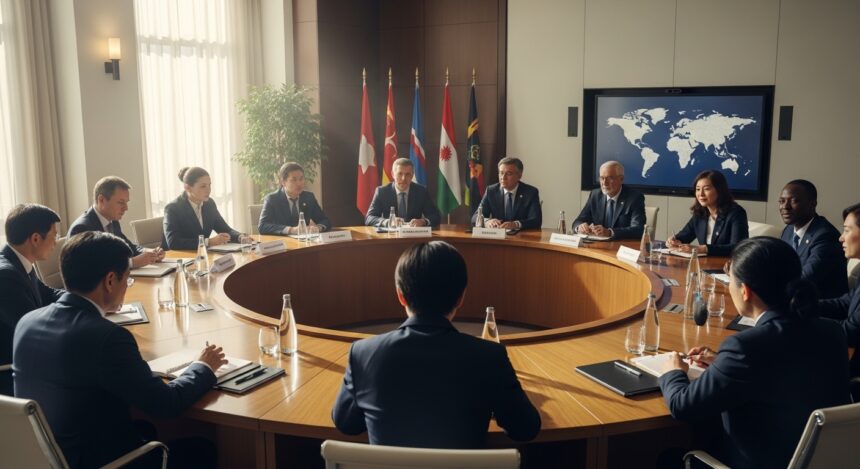
For decades, the world was largely bipolar (the US vs. USSR during the Cold War) and then unipolar (with the United States as the sole superpower). That era is officially over. We are now moving rapidly into a multipolar world.
What does that mean? Simply put, power is no longer concentrated in the hands of one or two countries. Instead, it’s spreading out.
The Rise of New Power Brokers
China is the most obvious challenger to US dominance, wielding immense economic power through initiatives like the Belt and Road Project. But it’s not just about China.
-
Regional Influencers: Countries like India, Brazil, Turkey, and Saudi Arabia are increasingly acting on their own interests, not simply aligning with traditional Western allies. They are building their own alliances and mediating conflicts, showing that you don’t have to be a “superpower” to have “super influence.”
-
The “Global South” Finds Its Voice: A major trend is the political coordination among developing nations. They are demanding reforms in global institutions like the United Nations and the World Bank, arguing that these bodies reflect the power structures of 1945, not 2024. They want a seat at the table where decisions about climate finance and global debt are made.
What This Means for You
This shift can lead to a more unstable world in the short term, as new powers test their strength. But in the long run, a multipolar world could mean that your country has more choices for trade partners, investment, and diplomatic support, rather than being tied to the whims of a single superpower.
Democracy vs. Autocracy: The Battle of Systems
One of the most significant global political trends is the ongoing tension between democratic and autocratic models of governance. For a while after the Cold War, it seemed like liberal democracy was the “end point” for everyone. That assumption is now being seriously challenged.
The Democratic Recession
We are witnessing what political scientists call a “democratic recession.” In many established democracies, trust in institutions—government, media, the judiciary—is at an all-time low.
-
Erosion from Within: In countries like Hungary and Poland (though Poland has recently seen a shift back towards the center), we’ve seen elected leaders use their power to weaken courts, restrict media freedom, and crack down on civil society. This is often called “democratic backsliding.”
-
The Rise of Strongmen: Globally, there’s a growing appeal for “strongman” leaders who promise to cut through bureaucratic red tape and restore national pride. Voters, frustrated with gridlock and corruption, are sometimes willing to trade democratic niceties for efficiency and order.
The Resilience of Democracy
However, it’s not all doom and gloom. We also see incredible resilience. Massive pro-democracy protests in places like Georgia and widespread voter turnouts in countries like India show that the desire for representation and accountability is still incredibly strong. The battle between these two systems will likely define international alliances for the next 20 years.
The Battle for Your Attention: Information Warfare
Politics today isn’t just fought on battlefields or in parliament buildings. It’s fought on your smartphone screen.
The End of a “Shared Reality”
Remember when we all watched the same three TV channels and read the morning paper? Those days are gone. Algorithms now feed us content that confirms our existing biases, creating echo chambers. This fragmentation of information has a direct political impact.
-
Disinformation as a Tool: State and non-state actors have realized that it’s cheaper and easier to weaponize information than to build a tank. Spreading fake news, hacking emails, and using bots to sow discord on social media are now standard tools of political warfare. The goal is often not to make you believe a specific lie, but to make you stop trusting anything you see.
The Deepfake Danger
We are just entering the age of AI-generated content. Deepfake videos—realistic but fake footage of leaders saying things they never said—are becoming harder to detect. Imagine the impact on an election if a convincing video of a candidate saying something outrageous goes viral an hour before polls close. Regulating this without infringing on free speech is one of the biggest challenges of the coming decade.
Economics is Politics (and Vice Versa)
You can’t separate economics from the global political trends shaping our world. The two are completely intertwined.
Weaponizing Interdependence
For years, we believed that global trade would prevent war. The logic was: if you build your economy with my parts, and I build mine with your resources, we won’t fight because it would be mutually assured destruction. This is called “interdependence.”
However, that interdependence is now being weaponized.
-
Trade Wars: The US-China trade war was a clear example. Tariffs aren’t just about economics; they are political tools to punish or pressure a rival.
-
Resource Nationalism: Countries rich in critical resources (like lithium for batteries or rare earth minerals for electronics) are realizing their geopolitical power. They are nationalizing mines or restricting exports to force other countries to build factories on their soil.
Supply Chains as a National Security Issue
The COVID-19 pandemic taught us a harsh lesson: just-in-time supply chains are efficient, but they are fragile. Now, countries are prioritizing “supply chain resilience.” They want to manufacture critical goods—like microchips and medicine—at home or in “friendly” countries. This process, known as “friendshoring,” is redrawing the map of global trade based on political loyalty rather than pure economic efficiency.
The Climate Mandate: Green Politics Goes Mainstream
Climate change is no longer just an environmental issue; it is the ultimate political driver.
The New Political Divide
In many countries, the old left-right political spectrum is being replaced by a new one: those who prioritize rapid climate action and those who prioritize economic stability and traditional industries. The “Yellow Vest” protests in France started as a reaction to a fuel tax meant to fight climate change, highlighting how green policies can create social unrest if they aren’t managed fairly.
Geopolitics of the Green Transition
The race to build electric vehicles, solar panels, and wind turbines is creating a new geopolitical landscape.
-
The New OPEC: Countries like the Democratic Republic of Congo (cobalt) and Chile (lithium) sit on top of the resources the entire world needs for a green future. This gives them enormous political leverage.
-
The Carbon Border Tax: The EU is pioneering a “Carbon Border Adjustment Mechanism.” Essentially, it’s a tax on imports from countries with weaker climate policies. This is a brilliant political move—it protects European industries and pressures other nations to clean up their act, but it also looks like protectionism to the rest of the world.
The Shrinking State vs. The Demanding Citizen
Finally, we have a paradox at the heart of modern politics: citizens are demanding more from their governments than ever before, while governments seem less capable of delivering.
The Crisis of Delivery
Whether it’s fixing potholes, running a healthcare system, or processing passport applications, trust in the government’s ability to “do the basics” has collapsed in many places.
-
Populism as a Symptom: Populist politicians thrive on this failure. They offer simple solutions to complex problems: “Just build a wall,” “Just leave the EU,” “Just ban immigration.” These slogans resonate because they offer clarity in a world that feels chaotic and unmanageable.
The Power of the Individual
At the same time, technology has empowered individuals and small groups to have an outsized impact. A single tweet from a celebrity can move stock markets. A well-organized online campaign can topple CEOs. A handful of activists blocking a highway can force a government to change its environmental policy. The relationship between the individual and the massive, lumbering state is being fundamentally renegotiated.
Practical Tips: How to Navigate These Trends
Feeling a bit overwhelmed? You’re not alone. Here’s how you can stay informed and grounded:
-
Diversify Your News Sources: Don’t rely on a single algorithm or news outlet. Read international perspectives (e.g., see how a German paper covers a US election, or how an Indian outlet covers a conflict in Africa). This helps break your echo chamber.
-
Follow the Money: When you see a political event, ask: “Who benefits economically from this?” Often, the political rhetoric is just a smokescreen for economic interests.
-
Check Your Emotions: If a news story makes you feel intense rage or fear, pause. It might be designed to do just that. Look for verified facts from neutral sources before sharing.
-
Understand Local Impact: Connect global trends to your local community. How does the trade war affect the factory in your town? How does the green transition affect your electricity bill? Making it local makes it understandable.
Frequently Asked Questions
Q: What is the biggest global political trend right now?
A: While there are several, the shift from a US-dominated world to a multipolar system is arguably the most foundational. This single trend influences everything from trade wars to military alliances.
Q: Is democracy dying?
A: Not necessarily dying, but it is certainly under stress. We are seeing a “democratic recession” in some places and a strong, resilient defense of it in others. It’s more accurate to say we are in a global battle of ideas about what the best form of government looks like.
Q: How does information warfare affect me?
A: It affects how you perceive reality. Information warfare aims to polarize societies, making it harder to find common ground with your neighbors. It erodes trust in institutions and can even influence how you vote.
Q: Why are trade wars happening?
A: Trade wars are primarily political tools used to protect domestic industries, punish rival nations, or force them to change their policies. They are a sign that countries now see economic strength as directly tied to national security.
Q: Can one person really make a difference in global politics?
A: Absolutely. While you can’t control a superpower, you can control your consumption, your vote, and your voice. Supporting ethical companies, voting in every local election, and engaging in respectful political discussion with your community are powerful acts that, when multiplied by millions, shape the direction of these global trends.
Conclusion
The global political trends shaping the future can seem scary and complex. The rise of new powers, the information war in our pockets, and the urgent challenge of climate change are rewriting the rules of the game.
But understanding these shifts is the first step toward feeling empowered rather than anxious. The world is not just happening to us. By staying informed, thinking critically, and engaging with our communities, we can navigate this new landscape. The future isn’t written yet—it’s being shaped by the decisions we make today, both as nations and as individuals.