



How to Grow on YouTube in 2026: The Complete Blueprint for Success
So you want to grow on YouTube in 2026? You’ve picked an exciting time to start or level up your channel. The platform has changed dramatically since the early days of shaky vlogs and clickbait thumbnails, but one thing remains constant: YouTube is still the world’s second-largest search engine, and it’s hungry for great content.
I’ve spent years studying what works on this platform, and I’ll be straight with you—growing on YouTube in 2026 requires a different approach than it did even two years ago. The algorithm is smarter, viewers are more selective, and the competition is fiercer. But here’s the good news: the fundamentals that actually matter have never been clearer.
Whether you’re just starting your first channel or you’ve been stuck at a few thousand subscribers for a while, this guide will walk you through exactly how to grow on YouTube in 2026. No fluff, no outdated advice—just practical strategies that work right now.
Let’s dive in.
Why YouTube Growth Has Changed (And Why That’s Actually Great)
Before we get into the tactics, let’s talk about why growing on YouTube today feels different. A few years back, you could post consistently and watch the subscribers roll in. Today, the platform has matured. Viewers have favorite creators they already watch, and they’re picky about who gets their attention.
But here’s what’s exciting: YouTube in 2026 rewards quality over quantity more than ever before. The algorithm doesn’t just look at views anymore—it studies watch time, viewer satisfaction, and whether people actually enjoy your content enough to come back for more.
This levels the playing field. A brand new channel with genuinely helpful content can outrank an established channel that’s gotten lazy. I’ve seen it happen countless times.
Step 1: Nail Your Niche (But Leave Room to Breathe)
The biggest mistake I see beginners make? Trying to be everything to everyone. You might love gaming, cooking, and travel, but mixing them all on one channel confuses both viewers and the algorithm.
Find Your Sweet Spot
In 2026, successful channels have a clear focus, but they’re not suffocated by it. Think of your niche as a neighborhood, not a single house. You want to be known for something specific while having room to explore related topics.
Let me give you an example. Instead of a channel called “Cooking Videos,” you might create “Budget-Friendly Meals for College Students.” That’s specific enough to stand out but broad enough to create hundreds of videos about recipes, grocery shopping tips, meal prep, and kitchen gadgets.
The “One Video Test”
Here’s a practical way to know if your niche is working: Can someone watch one of your videos and immediately understand what your channel is about? If they’d have to dig through your backlog to figure out your focus, you need to tighten things up.
When you’re trying to figure out how to grow on YouTube in 2026, specificity is your secret weapon. A smaller, dedicated audience is worth way more than a large, scattered one.
Step 2: Content That Actually Keeps People Watching
Here’s a truth that never changes: good content wins. But what does “good content” mean in 2026? Let’s break it down.
The Hook Matters More Than Ever
You have about 15 seconds to convince someone to stay. The days of “Hey guys, welcome back to my channel” openings are long gone. You need to start with value.
Instead of: “Today we’re going to talk about photography tips.”
Try: “Stop taking blurry photos—here’s the one setting you need to change right now.”
See the difference? The second version promises a specific benefit immediately. Viewers know exactly what they’ll get by watching.
Structure for Retention
Think of your videos as stories, even if you’re making educational content. Every good story has:
-
A beginning that introduces a problem or question
-
A middle that explores solutions or answers
-
An end that delivers on the promise and wraps things up neatly
When you structure your content this way, people naturally watch longer because they want to see how things turn out.
Quality Over Polish
Here’s something that might surprise you: viewers don’t need Hollywood production values. They need clarity and authenticity. A video shot on your phone with great lighting and clear audio will outperform a professionally produced video that feels cold and corporate.
People connect with people, not production companies. Let your personality show. Make mistakes and laugh them off. Be yourself—it’s the one thing you can offer that nobody else can copy.
Step 3: YouTube SEO That Actually Works in 2026
Search is still a massive driver of views, but YouTube’s search algorithm has gotten smarter. It’s not just about keywords anymore—it’s about context and viewer satisfaction.
Video Titles That Get Clicks
Your title has two jobs: tell the algorithm what your video is about and make humans want to click. The best titles do both naturally.
Some formats that consistently work:
-
The How-To: “How to Edit Photos in 5 Minutes (Even as a Beginner)”
-
The Question: “Why Is Your Wi-Fi So Slow? Here’s the Fix”
-
The Mistake: “5 Mistakes Killing Your Houseplants (And How to Save Them)”
-
The List: “10 Gadgets That Changed My Work From Home Setup”
Notice how these titles are clear and specific. They’re not trying to trick anyone—they’re making a promise that the video keeps.
Descriptions Still Matter
I know writing descriptions feels tedious, but they’re one of the best places to help YouTube understand your content. Write at least 200 words describing what your video covers. Use natural language, include your main keyword a few times, and actually describe what viewers will learn.
Don’t stuff keywords. Just write helpful information about your video topic.
Tags Aren’t What They Used To Be
Tags still have some value, but they’re much less important than they were years ago. Focus your energy on titles, descriptions, and actual video content. Tags are the cherry on top, not the sundae.
Step 4: Thumbnails That Stop the Scroll
In 2026, thumbnails are more important than ever. YouTube is visual, and your thumbnail is the first impression you make on a potential viewer.
What Works Now
The most effective thumbnails share a few common traits:
High contrast colors that pop against YouTube’s white background. Bright oranges, yellows, and reds tend to grab attention, but don’t go out—your thumbnail should still look professional.
Clear focal points. If someone glances at your thumbnail for half a second, they should immediately understand what the video is about. A single person’s face with an expressive emotion works incredibly well.
Minimal text. If you use text, make it big and keep it to 3-4 words maximum. Text should support the image, not crowd it out.
Authenticity sells. In 2026, viewers can spot a fake reaction from a mile away. Use genuine expressions and real screenshots from your video when possible.
Test Your Thumbnails
Here’s a trick I use: shrink your thumbnail down to the size of a postage stamp. If you can still tell what’s happening and read any text at that tiny size, it’s probably strong enough to work on YouTube where thumbnails appear small on phone screens.
Step 5: Consistency Without Burning Out
Every creator struggles with consistency at some point. You start strong, posting three videos a week, then life happens, and suddenly you haven’t uploaded in a month.
Find Your Sustainable Pace
Here’s the truth about how to grow on YouTube in 2026: consistency matters more than frequency. One quality video every week will outperform three rushed videos that viewers don’t enjoy.
Be honest with yourself about how much time you can realistically dedicate to YouTube. If you work a full-time job and have a family, posting twice a week might be impossible. That’s fine. Post once a week and make that video amazing.
Batch Your Work
The creators who make it look easy usually batch their work. They film multiple videos in one day, edit them over the next few days, and schedule them out over weeks.
Try this approach:
-
Spend one day researching and outlining 4-5 video ideas
-
Spend another day filming all of them
-
Spend the next few days editing
-
Schedule them to publish weekly
This method saves so much mental energy because you’re not constantly switching between different types of tasks.
Step 6: Engagement That Builds Community
YouTube in 2026 isn’t a broadcast platform—it’s a community platform. The channels that grow fastest are the ones that treat viewers like people, not numbers.
The Comment Section Is Gold
Reply to comments. I know it takes time, especially as you grow, but even a simple “Thanks for watching, glad this helped!” makes viewers feel seen.
Ask questions in your videos to encourage comments. “Have you tried this method? Let me know in the comments how it worked for you.” When people comment, they’re signaling to YouTube that your content is engaging.
Community Posts Work
Use the Community tab to stay connected between uploads. Post behind-the-scenes photos, ask for video ideas, share quick tips, or just check in with your audience. These posts remind subscribers you exist and give them reasons to engage with your channel regularly.
Collaborate Strategically
Collaborations are still one of the fastest ways to grow, but they work best when you partner with creators whose audiences would genuinely enjoy your content. Look for channels similar in size to yours (or slightly larger) in related niches.
A cooking channel collaborating with a kitchen gadget reviewer makes sense. A gaming channel collaborating with a fitness channel? Probably not.
Step 7: Analytics That Actually Matter
YouTube provides so much data that it’s easy to get overwhelmed. Let’s focus on the metrics that truly matter for growth.
Watch Time Over Views
I’d rather have a video with 1,000 views and 80% retention than a video with 10,000 views and 20% retention. Why? Because YouTube rewards videos that keep people on the platform. High retention tells the algorithm your content is satisfying, and it will recommend your video to more people.
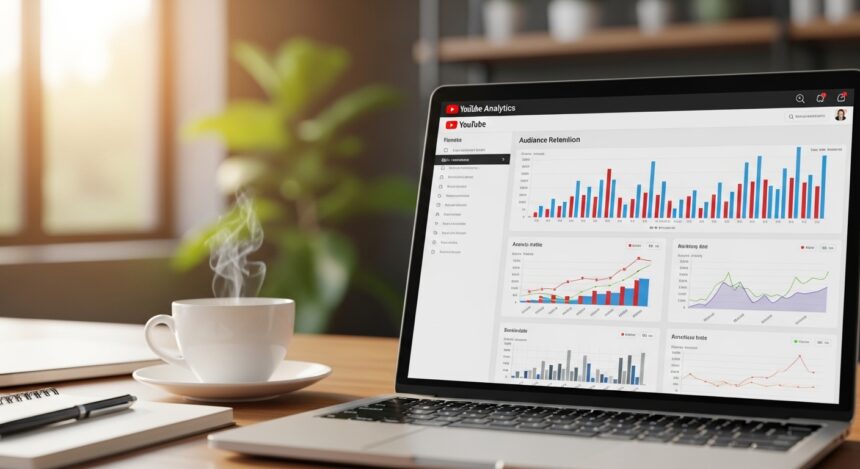
Check your Audience Retention report to see where viewers drop off. If people consistently leave at a certain point, figure out why and adjust future content.
Click-Through Rate Matters
Your CTR (click-through rate) tells you if your title and thumbnail are working. Aim for at least 5-10% on most videos. If you’re consistently below that, your thumbnails or titles need work.
Don’t Obsess Over Subscriber Count
Subscribers are nice, but they’re not the main goal. Focus on creating content that people want to watch grow YouTube in 2026. When you do that consistently, subscribers follow naturally. A channel with 5,000 highly engaged subscribers often earns more and has more influence than a channel with 50,000 disengaged ones.
Step 8: Trends vs. Evergreen Content
This is a balancing act every creator faces. Trendy content can bring sudden spikes in views, but evergreen content builds long-term stability.
Ride Trends Strategically
When a trend aligns with your niche, jump on it. If you run a tech channel and a new gadget releases, you should cover it. But don’t chase trends that have nothing to do with your focus just for views. Those viewers won’t stick around.
Build an Evergreen Foundation
Most of your content should be useful months or even years after you publish. “How to Tie a Tie” will get searches forever. “News About Yesterday’s Event” will be irrelevant next week.
Aim for a mix: 70-80% evergreen content that builds a lasting library, and 20-30% timely content that captures current interest.
Step 9: The Mindset Shift That Changes Everything
Let’s talk about something that doesn’t get discussed enough: your mindset. Growing on YouTube in 2026 requires patience and perspective.
It Takes Time
Most successful channels I know didn’t blow up overnight. They grew steadily over years. If you’re judging your success after three months, you’re quitting too soon. Think in terms of years, not weeks.
Compare Yourself to Yesterday
It’s easy to watch huge creators and feel like you’re failing. But those creators have been at this for years. Compare your channel today to where it was last month. Celebrate small wins—better retention, more comments, improved video quality.
Enjoy the Process
If you’re not enjoying making videos, it will show grow YouTube in 2026 . Viewers can tell when you’re having fun versus when you’re going through the motions. Create content you genuinely care about, and that passion will connect with people who care about the same things.
Frequently Asked Questions
How often should I upload to grow on YouTube in 2026?
Quality always beats quantity. It’s better to upload one excellent video per week than three mediocre ones. Find a schedule you can maintain long-term without burning out. For most creators, once a week is ideal. If you can manage twice a week with consistent quality, even better.
Do I need expensive equipment to start?
Not at all. Many successful channels started with just a smartphone and natural lighting. Good audio matters more than video quality, so consider investing in a affordable microphone first. As you grow and earn money, you can upgrade your gear gradually.
How long should my videos be?
Long enough to cover the topic well, short enough to respect viewers’ time. For most topics, 8-15 minutes works well. Longer videos can perform great if the content justifies the length, but never add fluff just to hit a certain duration.
Should I respond to negative comments?
Only if they’re asking genuine questions or offering constructive feedback. Ignore trolls completely—engaging with them encourages more negativity. Some negative comments actually boost engagement signals, so don’t stress about them too much.
Can I grow on YouTube without being on camera?
Absolutely. Many successful channels use screen recordings, animations, stock footage, or B-roll with voiceover. Viewers care about value, not necessarily seeing your face. If you’re camera-shy, start with a format that doesn’t require you on screen.
Your Growth Starts Now
Growing on YouTube in 2026 isn’t about shortcuts or tricks. It’s about consistently creating content that helps, entertains, or inspires a specific group of people. The algorithm rewards creators who serve their audiences well.
Start with one video. Make it the best you can. Then make another. Keep learning, keep improving, and keep showing up. The viewers who need exactly what you offer are out there waiting—they just haven’t found you yet.
You’ve got this. Now go make something great.