




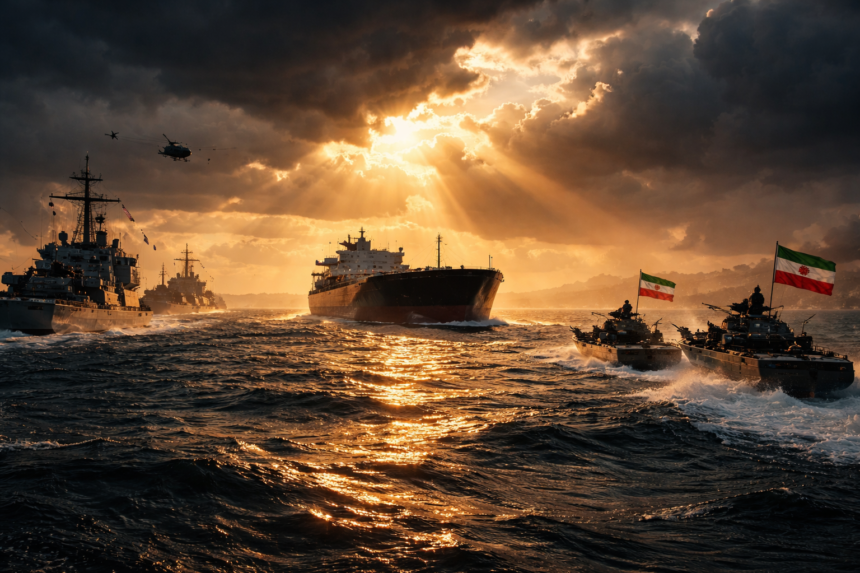
US Naval Blockade of Iran in Strait of Hormuz: What It Means for Global Oil and Rising Tensions
US naval blockade Iran, The possibility of a US naval blockade of Iran in the Strait of Hormuz has quickly become one of the most closely watched geopolitical developments in the world. With tensions rising between the United States and Iran, attention has shifted to one of the most strategically important waterways on the planet—the Strait of Hormuz.
This narrow stretch of water connects the Persian Gulf to the Arabian Sea and serves as a critical route for global oil shipments. Any disruption here has the potential to ripple across the global economy, affecting fuel prices, trade, and even political stability.
As reports of increased naval activity circulate, analysts and policymakers are closely monitoring the situation. The stakes are high—not just for the countries directly involved, but for the entire world.
In this article, we break down what is happening, why the Strait of Hormuz matters, the historical context of US–Iran tensions, and what this situation could mean for global markets and security.
What Is Happening Right Now?
Recent developments suggest a significant escalation in tensions between the United States and Iran, centered around naval activity in the Strait of Hormuz.
Understanding the “Naval Blockade”
A naval blockade typically involves:
- Deploying military ships to restrict movement in a specific area
- Monitoring or intercepting vessels
- Preventing certain goods or military assets from passing through
While the term “blockade” can vary in interpretation, even increased naval presence in such a sensitive region can be perceived as a serious escalation.
Current Situation
Reports indicate:
- Increased US naval patrols in and around the Strait
- Heightened military readiness in the region
- Strong warnings and counter-statements from Iranian officials
These developments have raised concerns about potential confrontation, even if both sides publicly emphasize deterrence rather than direct conflict.
Why the Strait of Hormuz Matters
The Strait of Hormuz is often described as the world’s most important oil chokepoint.
Global Oil Lifeline
A significant portion of the world’s oil supply passes through this narrow channel every day.
Key facts include:
- Roughly 20% of global oil consumption flows through the Strait
- Major oil exporters in the Middle East rely on it
- It connects the Persian Gulf to international markets
Even minor disruptions can cause major fluctuations in global oil prices.
Strategic Importance
Because of its importance:
- The Strait is heavily monitored by military forces
- It has been a flashpoint in previous geopolitical tensions
- It plays a key role in global energy security
Any military escalation here is immediately felt worldwide.
Background of US–Iran Tensions
To understand the current situation, it’s important to look at the long-standing tensions between the United States and Iran.
Historical Context
Relations between the two countries have been strained for decades, shaped by:
- Political disagreements
- Economic sanctions
- Regional influence struggles
Nuclear Deal Issues
One of the most significant developments in recent years was the Iran nuclear deal, which aimed to limit Iran’s nuclear program in exchange for sanctions relief.
However:
- The agreement faced challenges and withdrawals
- Tensions increased after its breakdown
- Diplomatic relations became more strained
Recent Escalations
In recent years, tensions have included:
- Sanctions on Iran’s economy
- Military incidents in the Gulf region
- Cyber and intelligence operations
These ongoing issues have created a fragile and unpredictable relationship.
US naval blockade Iran Military and Strategic Implications
The presence of naval forces in the Strait of Hormuz carries serious strategic implications.
Naval Operations
Both the United States and Iran maintain military capabilities in the region.
These include:
- Warships and patrol vessels
- Surveillance systems
- Missile defense capabilities
The proximity of these forces increases the risk of miscalculation.
Risk of Escalation
Potential escalation scenarios include:
- Accidental clashes between naval units
- Interception of commercial vessels
- Expansion of conflict beyond the Strait
Even a small incident could quickly escalate due to the high level of tension.
US naval blockade Iran Impact on Global Oil Prices and Economy
One of the most immediate concerns is the effect on global energy markets.
Oil Price Volatility
When tensions rise in the Strait of Hormuz:
- Oil prices often increase
- Markets react to uncertainty
- Energy companies adjust supply expectations
Even rumors of disruption can trigger price spikes.
Effects on Consumers
Higher oil prices can lead to:
- Increased fuel costs
- Higher transportation expenses
- Rising prices for goods and services
This can affect economies worldwide, including countries far from the Middle East.
Impact on Global Trade
The Strait is not only important for oil but also for broader trade routes.
Disruptions could:
- Delay shipments
- Increase shipping costs
- Impact global supply chains
Expert Analysis and Opinions
Several analysts and commentators have weighed in on the situation, offering different perspectives.
Laura Barrón-López
Barrón-López has highlighted the importance of clear communication between nations, noting that misunderstandings in high-tension areas like the Strait of Hormuz can escalate quickly.
Rick Stengel
Stengel has emphasized the role of diplomacy, suggesting that while military presence may act as a deterrent, long-term stability requires negotiation and dialogue.
Arash Azizi
Azizi has pointed out that Iran views the Strait as a strategic leverage point, which it may use in response to economic or political pressure.
Possible Outcomes and Future Scenarios
The situation in the Strait of Hormuz could develop in several ways.
1. Diplomatic Resolution
The best-case scenario involves:
- Negotiations between the United States and Iran
- De-escalation of military presence
- Agreements to ensure safe passage
2. Continued Tension
A more likely short-term outcome may include:
- Ongoing military presence
- Periodic incidents or warnings
- Continued uncertainty in global markets
3. Escalation Into Conflict
The worst-case scenario involves:
- Direct military confrontation
- Disruption of oil shipments
- Broader regional conflict
While this outcome is less likely, it cannot be completely ruled out.
Key Takeaways
- The Strait of Hormuz is one of the most critical waterways for global oil supply.
- Rising tensions between the United States and Iran have increased global concern.
- Naval activity in the region can significantly impact oil prices and trade.
- Experts emphasize the importance of diplomacy to avoid escalation.
- The situation remains uncertain, with multiple possible outcomes.
FAQ
What is the Strait of Hormuz?
The Strait of Hormuz is a narrow waterway connecting the Persian Gulf to the Arabian Sea and is a key route for global oil shipments.
Why did the US start a naval blockade of Iran?
The situation involves increased military presence and strategic positioning, often linked to broader geopolitical tensions between the two countries.
How will this affect oil prices?
Tensions in the Strait can lead to higher oil prices due to fears of supply disruptions.
Is there a risk of war between the US and Iran?
While there is a risk of escalation, both sides typically aim to avoid full-scale conflict.
Why is this situation important globally?
Because the Strait of Hormuz is vital for global energy supply, any disruption affects economies worldwide.
Conclusion
The developing situation involving the United States, Iran, and the Strait of Hormuz is a reminder of how interconnected global politics and economics truly are. What happens in a narrow waterway in the Middle East can influence fuel prices, trade flows, and political stability across the globe.
While tensions remain high, the focus now shifts to whether diplomacy can prevent further escalation. The coming weeks will be critical in determining whether the situation stabilizes or intensifies.
For now, the world watches closely, aware that the Strait of Hormuz remains not just a strategic chokepoint—but a symbol of how fragile global balance can be.
